

By Kitty de Melo
On Sunday, November 12, 2023, the Israeli armed forces announced they were ready to help evacuate babies from Gaza’s largest hospital, extending the daily evacuation period from 4 to 12 hours to allow for further evacuation. Palestinian authorities reported that two newborns had died and dozens were at risk after the hospital ran out of fuel for generators amid intense fighting in the region. Gaza border authorities announced the reopening today of the Rafah crossing into Egypt, exclusively for holders of foreign passports. Additionally, Jordan airdropped more aid to a field hospital.
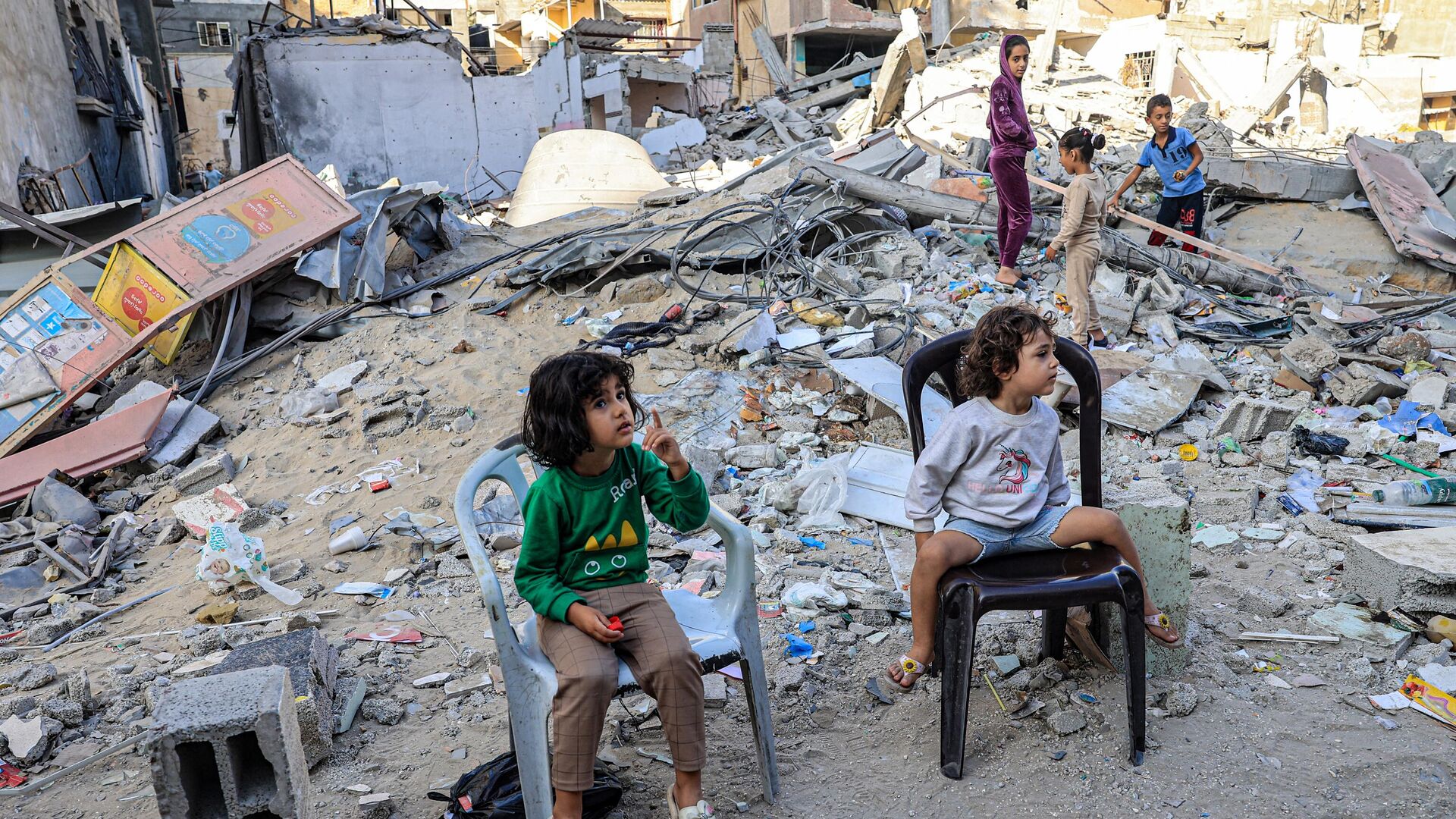 Hamas has declared that it has completely or partially destroyed more than 160 Israeli military targets in Gaza, including more than 27 tanks and vehicles in the last 48 hours. The Israeli military spokesman reported that Hamas has lost control of northern Gaza.
Israeli Prime Minister Benjamin Netanyahu announced Saturday night the deaths of five more Israeli soldiers in Gaza. The Israeli army has confirmed the deaths of 46 soldiers since the start of its ground operations in the area.
Rockets continue to be fired from Gaza into southern Israel, where approximately 1,200 people have been killed and more than 200 taken hostage by Hamas.
Palestinian officials reported on Friday that 11,078 Gaza residents have been killed in air and artillery strikes since October 7, with about 40% being children.
Progress on Hostage Agreement
Israel’s three main TV networks, without citing sources, reported some progress in an agreement to release hostages held by Hamas in Gaza.
In Tel Aviv, thousands gathered for a rally in support of the hostages’ families.
Critical situation at Al Shifa Hospital
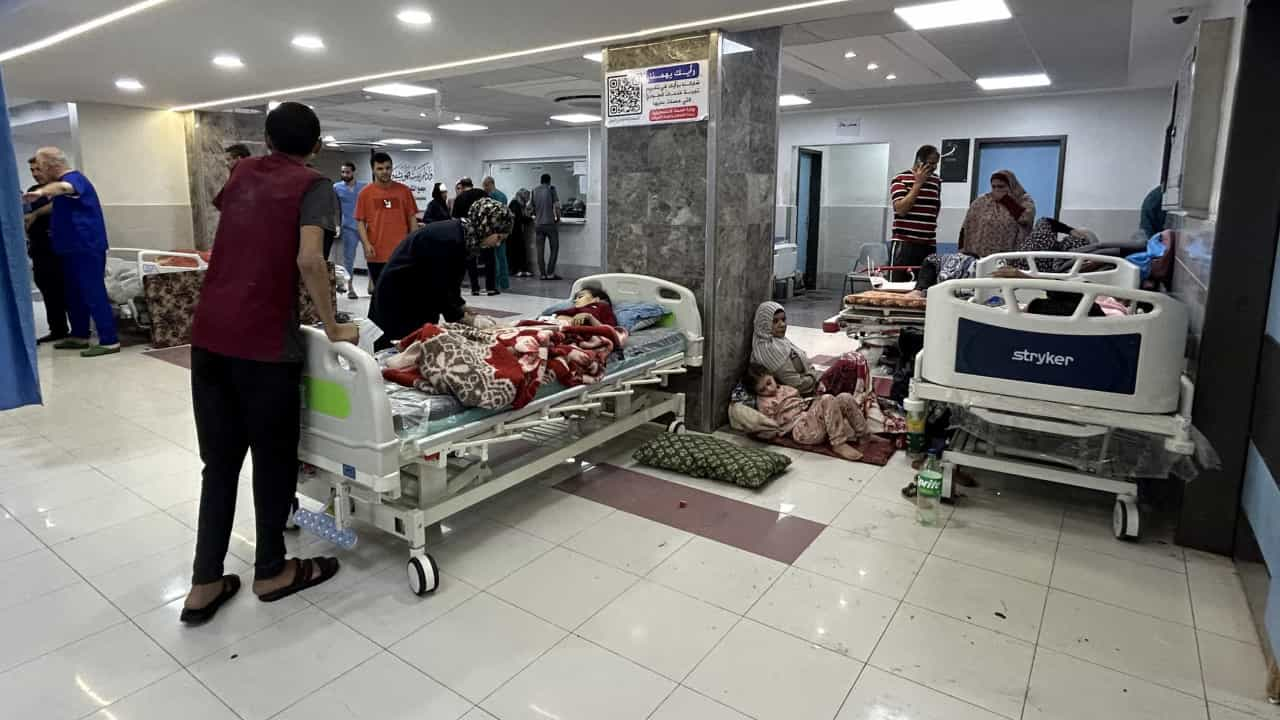 Residents of Gaza reported that Israeli troops clashed with Hamas gunmen overnight around Gaza City, where Al Shifa Hospital, the largest in Gaza, is located.
Ashraf Al-Qidra, a representative of the health ministry in Hamas-controlled Gaza, said the hospital has been out of service since Saturday.
“We are using all means to try not to lose any more lives,” Al-Qidra told a Reuters reporter. “Unless a solution is found to provide us with fuel or electricity, patients and the injured are at risk of death.”
Israel’s chief military spokesman, Rear Admiral Daniel Hagari, said the Israeli army would assist in the evacuation of patients and babies from the hospital, at the request of the Al Shifa staff. Al-Qidra said there were a total of 45 babies, as they are being used as a shield by Hamas, which operates from the hospital’s basement.
Asked about the evacuations, Al-Qidra said: “We are not aware of any plans to remove the babies and the sick and take them to a safer hospital. So far, we are praying for their safety and that no more are lost.”
Earlier, the World Health Organization expressed “grave concern” for the safety of all refugees in the hospital due to the fighting and said it had lost communication with its contacts there.
Israel has urged doctors, patients, and thousands of evacuees who sought refuge in hospitals in northern Gaza to leave so that Israeli troops can confront Hamas terrorists. The latter have established command centers under and around the hospitals, and rocket launch sites against Israel are located in the hospital area.
Hamas denies using hospitals in this manner. Medical officials say patients could die if moved, and Palestinian officials say the conflict between Hamas and Israel makes it dangerous for them to leave the hospital.
Israeli Agriculture Minister Avi Dichter called the evacuations the “Nakba of Gaza” – a reference to the mass exodus of Palestinians after the founding of Israel in 1948.
“Operationally, there is no way to wage a war the way Hamas is using civilians in Gaza,” said the IDF (Israel Defense Forces). “However much we try not to target civilians, it is impossible due to the way Hamas is employing its strategy within the Gaza territories,” stated Dichter. “I don’t know how this will end, since they are using their own people as hostages, and we need to move forward. The only way is to try to ask the people to leave, but Hamas won’t allow that to happen. We are granting almost 12 hours of daily ceasefire to allow people to leave, but there are reports of Palestinians being executed by Hamas when they try to leave the conflict zone.”
Call for an Immediate Ceasefire
Al Shifa officials told Reuters reporters that there had been continuous shelling for more than 24 hours. Most of the hospital staff and people sheltering there had left, but 500 patients remained.
The military wing of Hamas’s ally, Islamic Jihad, the Al-Quds Brigades, said it was “involved in violent clashes in the vicinity of the Al Shifa Medical Complex, in the Al Nasr neighborhood and at the Al Shati camp in Gaza.”
Al Nasr is home to several important hospitals.
Israel previously said it had killed a Hamas terrorist who was apparently preventing the evacuation of people from a hospital in the north. The Palestinians themselves informed the IDF that these terrorists were threatening them, preventing them from evacuating the hospital. They provided the coordinates, as shown in the conversation between the Palestinians and the IDF.
In London, at least 300,000 pro-Palestinian demonstrators marched, and police arrested more than 120 people while trying to prevent attacks against people participating in a peaceful pro-Israel protest. More than 20,000 people joined a pro-Palestinian rally in Brussels, amidst Hamas extremists. Even in the protests, they are using people as shields to ignite the protests and use them as a means of protection, setting fire to police officers and vandalizing property. People have no idea that participating in these protests helps Hamas perpetuate its terrorism.
In the current Middle Eastern landscape, Israel faces attacks on multiple fronts, signaling an acute phase of the conflicts in the region. Yesterday, Israeli aircraft carried out airstrikes along the border with Lebanon, attempting to neutralize Hezbollah rocket launch sites in response to attacks by this militant group against Israeli army posts. This escalation of violence is part of a series of frequent clashes on the Lebanon-Israel border. Sayyed Hassan Nasrallah, leader of Hezbollah, declared that his group is involved in fighting in the region and threatened to intensify the violence, while Israel’s conflict in Gaza with Hamas, an ally of Hezbollah, approaches one month.
Hezbollah proclaimed it was prepared for all possibilities, stating it could resort to them at any time. The group reported striking at least six Israeli border posts using “rockets and weapons appropriate,” and claimed to have hit precise targets and destroyed technical equipment. According to the Beirut-based Al-Mayadeen TV network, Hezbollah first employed two Burkan rockets with heavy warheads in an attack on an Israeli post known in Lebanon as Jal al-Allam.
Israel Attacked from All Sides, IDF Shows Its Firepower
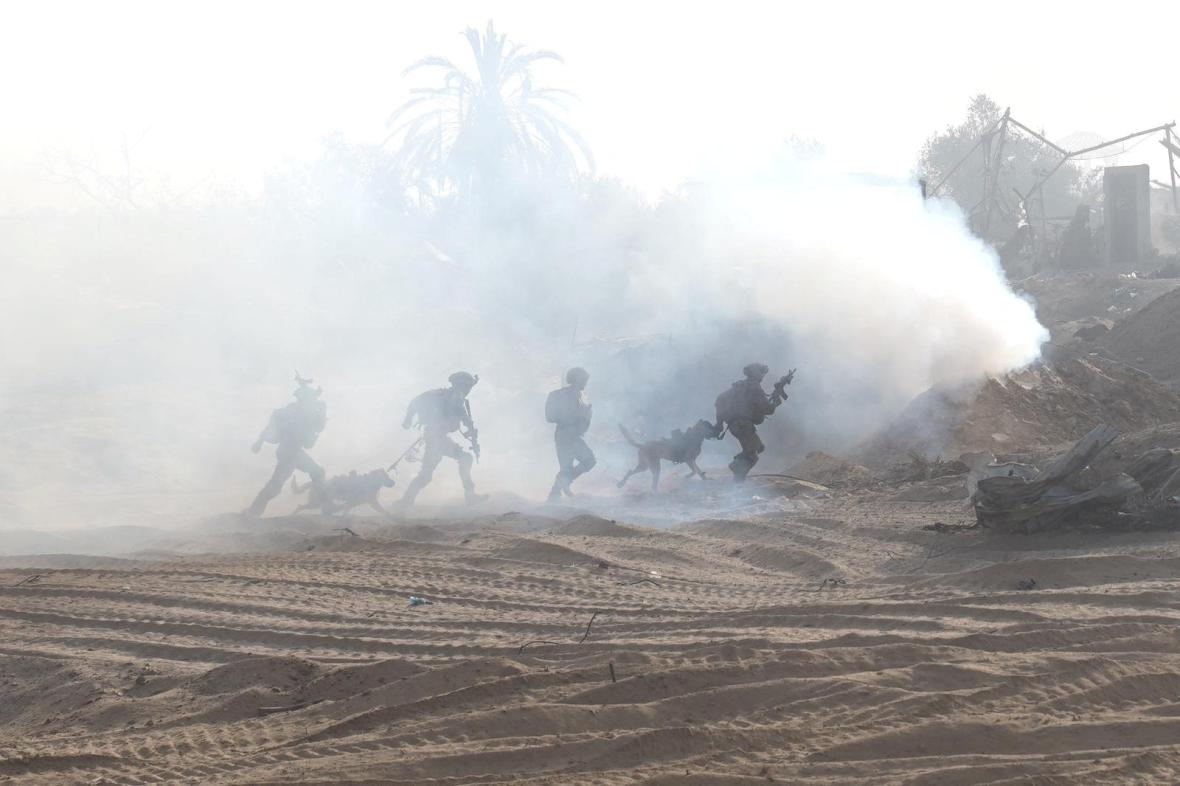 In a scenario where Israel is under constant pressure and attacks from multiple militant groups, the country has demonstrated significant responsiveness and firepower. Surrounded by adversaries on several fronts, Israel recently responded with airstrikes along the border with Lebanon, targeting Hezbollah rocket launch sites. This military response reflects Israel’s defensive yet assertive posture in the face of the challenges posed by regional conflicts.
Hezbollah, in particular, has intensified its attacks, launching rockets and employing heavy weaponry against Israeli positions. In retaliation, Israel has mobilized its air force and artillery to neutralize threats and prevent future attacks. The situation is further complicated by Hamas’s involvement in Gaza, creating an additional front of combat for Israel.
These confrontations highlight not only the geopolitical complexity of the region, but also Israel’s ability to remain firm and responsive in the face of multiple and simultaneous threats. The country continues to demonstrate a combination of surveillance, advanced military technology, and strategy—crucial elements for its defense in such a challenging environment.
Recently released video footage from the IDF (Israel Defense Forces) shows Israeli soldiers carrying out a risky act by personally delivering 300 liters of fuel to Shifa Hospital in Gaza, intending to address urgent medical needs. Ironically, Hamas, which controls the region, had prohibited the hospital from receiving this fuel. This incident occurs at a time when the Hamas-controlled Gaza health ministry has been issuing warnings about a critical fuel shortage at hospital facilities. This raises a crucial question: why would Hamas prevent the hospital from receiving such an essential resource? Despite Israel’s efforts to distance itself from the villainous image in this complex scenario, it is observed that part of the population, influenced by a possibly distorted narrative, continues to unconsciously support Hamas. What could explain this apparent contradiction? Is the root of this phenomenon misinformation or something deeper in the collective psyche?
#palestinefreefromhamas

A Florida Review é mais do que uma revista, é uma entidade cultural com mais de quatro décadas de história, fundada por Chico Moura e fortalecida sob a liderança de Rodrigo Lisboa Soares. Desde o final dos anos 1980, expandiu seu impacto dentro e fora dos Estados Unidos, consolidando-se como referência editorial e ponte entre culturas. A Florida Review serve hoje a mais de um milhão de brasileiros ao redor do mundo, promovendo informação responsável, pensamento crítico e iniciativas filantrópicas que valorizam a identidade e a diversidade brasileira. Guiada por um compromisso inegociável com a verdade, livre de viés ou partidarismo, nossa missão é oferecer conteúdo relevante, atual e consciente que informa, conecta e inspira. Não somos apenas uma publicação digital: somos um patrimônio vivo da comunidade brasileira no exterior.